-
পরবাস
বাংলা ভাষা, সাহিত্য ও সংস্কৃতি
Parabaas, a Bengali webzine since 1997 ... ISSN 1563-8685 -
ছোটদের পরবাস
Satyajit Ray
Rabindranath Tagore
Buddhadeva Bose
Jibanananda Das
Shakti Chattopadhyay
সাক্ষাৎকার -
English
Written in English
Book Reviews
Memoirs
Essays
Translated into English
Stories
Poems
Essays
Memoirs
Novels
Drama

The Land Where
I Found It All-

Order Here for Free Shipping in India
-
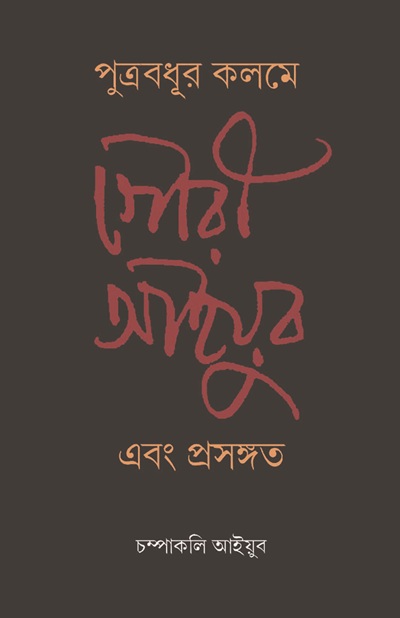
পুত্রবধূর কলমে গৌরী আইয়ুব এবং প্রসঙ্গত
-

বিশ্বের ইতিহাসে হুগলি নদী
-
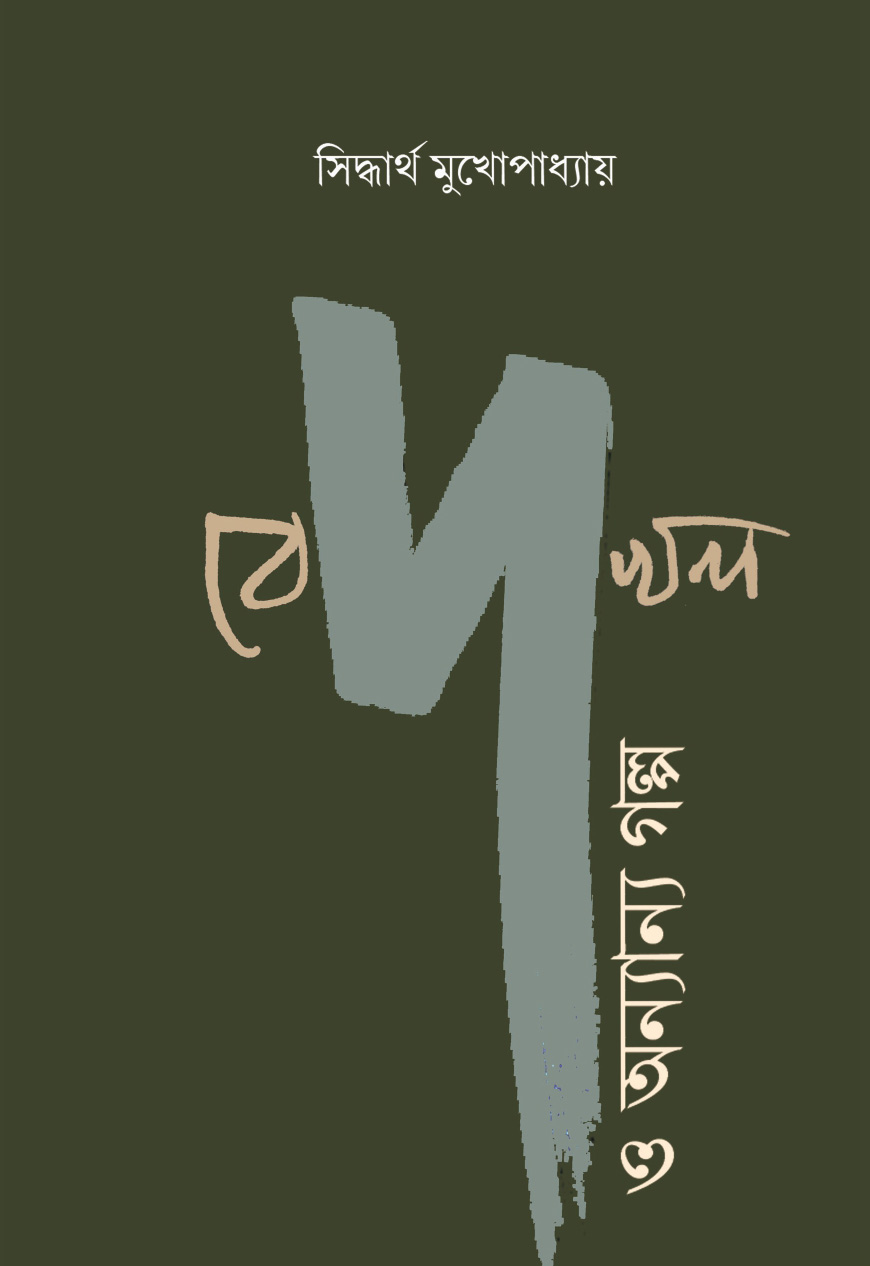
বেদখল ও অন্যান্য গল্প
-
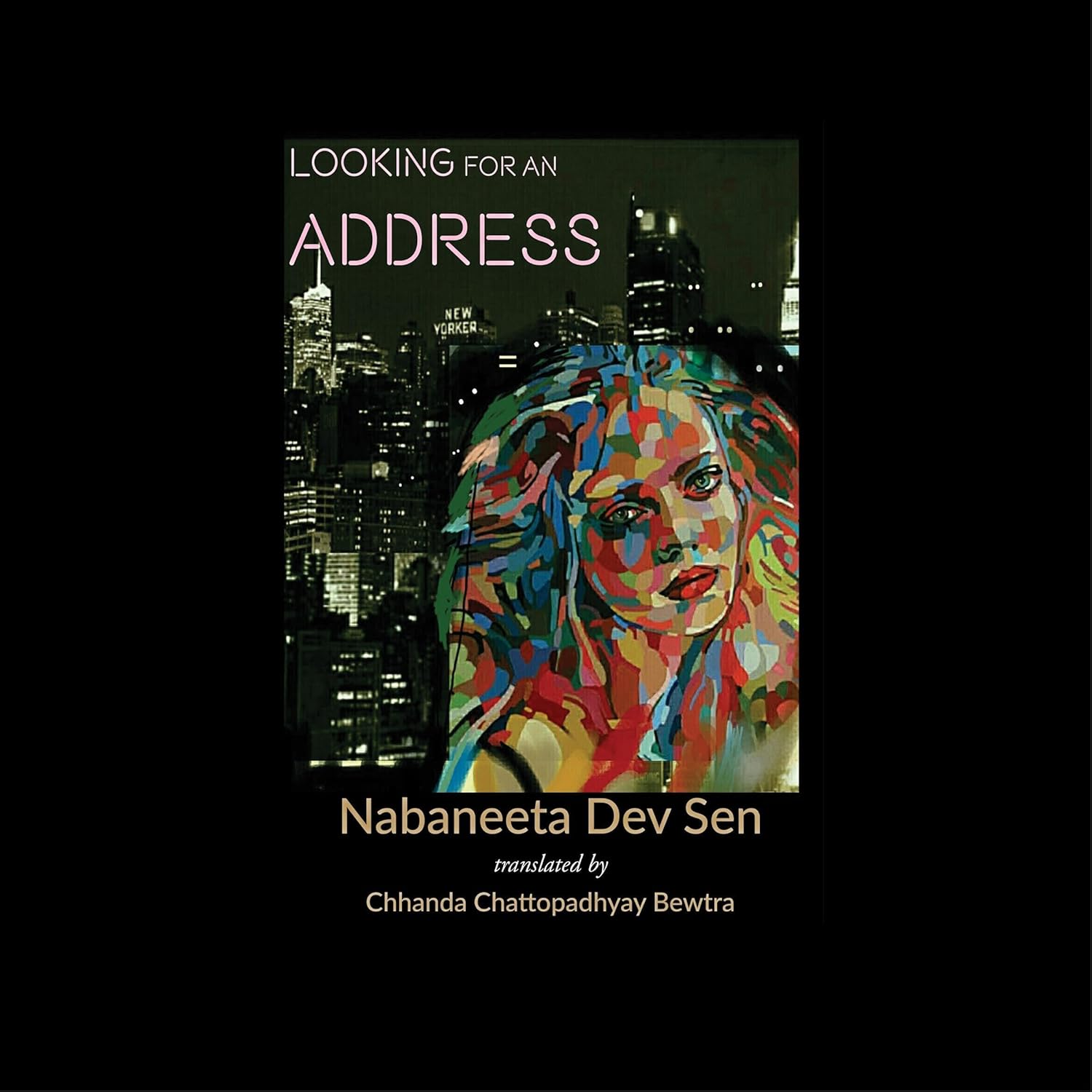
Audiobook
Looking For An Address
Nabaneeta Dev Sen
Available on Amazon, Spotify, Google Play, Apple Books and other platforms.
-

পরবাস গল্প সংকলন-
নির্বাচন ও সম্পাদনা:
সিদ্ধার্থ মুখোপাধ্যায়)
-

Parabaas : পরবাস : বাংলা ভাষা, সাহিত্য ও সংস্কৃতি -
পরবাস | English | Drama
Share -
Plays on Trial: Kalidasa and Aristotle : Sisir Kumar Das
translated from Bengali to English by Adrija Guha
Kalidasa: Hello! Did you call me? Aristotle: Yes. I’m glad that you have finally come. Kalidasa: I have also been thinking of meeting you for a long time. But— Aristotle: But— Kalidasa: The reputation of your scholarship is so great that it seemed best to stay away. With young people like us— Aristotle: Yes, no doubt I’m quite a bit older than you— Kalidasa: Probably seven or eight hundred years. Aristotle: That’s why I don’t want to get into trouble these days. But you are the one who got me into this mess— Kalidasa: I? I really cannot understand. Aristotle: You should have. Your play— Abhijñānaśākuntalam— is the source of this trouble. Kalidasa: The play does have some issues, certain confusions, I mean, complications, no doubt. But those are of Shakuntala’s or Dushmanta’s. I don’t think that they have anything to do with you. Did you find any other issues? Aristotle: Your whole play is confusing. Kalidasa: Oh! Is this your idea about my play? Aristotle: Is any other idea possible? Look, I already told the officials of this Tragedy Festival that I couldn’t be the judge. But they were so stubborn that I finally had to agree. I’ve been watching plays for the past fifteen days. Now I have to announce the result of my judgment. Kalidasa: Then do that. What’s restraining you? Aristotle: It’s for you. Your play has caused so much confusion. Kalidasa: Look, I didn’t select the play. They didn’t even ask for my permission to stage it. Especially because of the enthusiasm of that handsome boy, Göethe— perhaps— Aristotle: That boy is also too problematic. How old would he be? Kalidasa: He’s even younger than me— at least twelve hundred years younger— Aristotle: Oh, Zeus! Why does everybody drag me among these young people! Listen, a few things need to be settled with you first. Before I declare why your play doesn’t deserve an award, I would like to clarify a few things. Kalidasa: My play doesn’t merit an award! Once you have already taken that decision, is there any need for discussion? Aristotle: Indeed, there is. I need to know why my decision is right. I need your help for that. Kalidasa: Oh, I see! But how can I help you? Aristotle: First of all, tell me, why did they send your play to a Tragedy Festival? Kalidasa: Look, I don’t know what tragedy is. I haven’t claimed that the play is a tragedy. Aristotle: I’m relieved to hear that. But … perhaps they took it to be a tragedy. Kalidasa: I can’t say anything about them. But will you kindly tell me what this thing is called— tragedy? Aristotle: Oh dear! Don’t you know what tragedy is? Haven’t you read my lectures on tragedy? Did Alexander not make any arrangements to teach you Greek? To Alexander, I did— Kalidasa: Actually, it probably wasn’t Alexander’s fault. We weren’t particularly enthusiastic about it. Aristotle: It would have been better if you were; at least you would not have asked what tragedy is. So, you don’t keep track of my discussions on tragedy? Kalidasa: No, Sir. But I’ve seen a few plays which you call tragedies. I’ve heard that you have written something about tragedy— but I’m really ashamed—if you can kindly tell— Aristotle: I see, you get people into a lot of trouble. It was a long time ago, and I don’t remember it very well. But the point is, tragedy is an imitation of an action, the action being profound, serious, complete and— Kalidasa: Shakuntala’s action is profound, serious, complete and — Aristotle: I admit. The play is profound, serious and complete. The language in the play has also impressed me. The songs have also given me happiness. But the problem is elsewhere—that’s why I was asking whether you would call it a tragedy. The beginning of your play is problematic. The play begins well before the point where it should have started. Kalidasa: Many people have said many things about my play. That the beginning of my play is problematic is something I’m hearing for the first time today. Aristotle: Because today you are listening to Aristotle. A play cannot begin wherever you want. If I say that the play should begin with Shakuntala’s arrival at the Royal court, would that be unfair? A song is sung, it is beautiful, and there is irony and bitterness in it. And that jester has left the stage—only he could recognise Shakuntala when she enters. The King’s memory is lost—he has forgotten his love affair. He has rejected Shakuntala on moral grounds. Both the King and Shakuntala appear radiant, distinct, direct and faithful. Shakuntala is leaving; the King is confused and shocked. This is where the play really begins. Everything you stated earlier lies outside the scope of the play. Kalidasa: It seems our perspectives on where a play truly begins are different—perhaps my understanding of its natural starting point differs from yours. Aristotle: There is no doubt about it. I don’t understand why you have kept the first four acts of your play. The first, second and third acts of your play are just descriptions—and the fourth act? I can’t find it to be significant. The act is a beautiful poem, and I have been overwhelmed at times, Kalidasa, but I can’t understand how it is appropriate for the play. Look, I know you’re Indian. You’re young, I mean, younger than me. So naturally, your plays can be different, but that doesn’t mean you will write plays that cannot be considered plays at all. Kalidasa: If this is so, then why are you analysing in vain? Aristotle: That’s precisely the point. Maybe yours is actually a play, but I’m not able to judge it as such. I’m unable to accommodate it into my thought process. But, I admit, that I have been perturbed—I feel too exhilarated. I feel I have been wrong somewhere; I cannot understand it. But I do want to understand. Kalidasa: Exactly why are you feeling perturbed or exhilarated? Aristotle: A long time ago, I saw and read a play by one of our dramatists—Sophocles—and felt very perturbed. The play was a tragedy, but the end of that tragedy was neither pain, nor separation, nor mourning. Separation, death and annihilation cover a large part of what we understand as tragedy. Especially at the end. By tragedy we mean the change in human destiny—from good to bad, from happiness to sadness, from rising to falling. But in that play, a sinful hero is transformed into a holy self; a mortal man receives a slice of immortality. Kalidasa: What is your opinion about that play? Aristotle: I have remained silent about it. I didn’t say anything as it didn’t fit into my idea of a play. Kalidasa: Then you can follow that same path now. I will not complain to anyone. Aristotle: No, no. Your play has overwhelmed me even more than that play. Kalidasa: Thank You! Aristotle: No need to thank me. I felt very confused after seeing your play. I have said that the fifth act of your play is the proper beginning; here, however, we come across a dramatic moment. A man has lost a part of his memory. He tries to remember, but he cannot. But he does not know that he is amnesiac. He does not even understand whether he has been deceived. Is he doing anything wrong? A woman has come forward claiming to be his wife. Ashram sages are speaking in her support. Are they lying? But the King was not aware of ever having seen the woman. He cannot say. He will apply his own intelligence, his own logic. But he is wrong and hence doing injustice to Shakuntala. Here lies the play’s main problem. How will the problem be solved? Here’s the need for revelation. Only experience can lead to revelation, yet that very experience has been lost. Excellent, I appreciate your strategy here, and I also support your decision to remove the jester. As a result, the process of revelation will unfold more gradually—but—Kalidasa: If you allow me, my idea about the beginning is different— Aristotle: Also, about the middle of a play and— Kalidasa: I guess, you’ll say, about the ending too. Aristotle: You’re right. Kalidasa: There’s more. I think we have different ideas about what an action is. In fact, what you call an action is not the only action, even though it is at the center of the play. It seems this has bothered you, too. Aristotle: You have said it correctly. Keep going. Kalidasa: At the center of my play is the harmonisation of two opposing forces, not a conflict. I think this is probably why you want to question the validity of my work as a play. A young king visits the hermitage, falls in love, secretly marries Shakuntala and abandons her. A change comes over Shakuntala’s entire personality; a conflict arises between her daily activities and her lover-self, and, as a result, a curse descends on her life. You are saying that all these are external to the play. Aristotle: Correct. And that curse that you have forced on the play? There’s a play by Sophocles about whom I was talking—my favourite play, my most favourite play—there’s a curse there as well. A prophecy occurred about a child—he would kill his father, and then he would marry his mother. This prophecy and that sage of yours—Durvasa’s curse—both have different treatments. The curse is external in Sophocles’ play; in your play, it is internal. There, the hero learns of the curse and devises an elaborate plan to avoid it, which complicates the play’s pace. In your play, the curse has bound Shakuntala and the King, preventing them from moving independently. The climax, the play’s complexities and the deception all occur from within the play. I don’t like that an external power, a divine one, will direct the play. That is why, Euripides’ play, I— Kalidasa: I don’t differentiate between the natural and the supernatural. Aristotle: What are you saying— Kalidasa: If you do, then any discussion regarding my play is fruitless. I have a special world, and at first, that world must be accepted. In this world, divine or supernatural power does not come from outside; it is part of this world. Here, humans, animals, trees and if necessary, gods – all live in this world. You may not like it, but that’s a different question. But this is my world. In this world, a fawn follows a woman, pulling at the corner of her saree, just as a baby follows its mother. Here, people share their happiness and sorrows with the plants and trees. That’s why, before Shakuntala leaves the hermitage, the sages inform the plants and trees about her departure. There’s nothing supernatural in it. This is my world. In this world, Durvasa’s curse is not ‘supernatural’ as you mean the word. This is not an exception to the rule. This is just another rule of my world. Aristotle: But—It’s okay; you speak well, continue. Kalidasa: But in my world, everything is bound by human rules. Here, everyone is humane— animals, trees, divine beings. Everyone is entitled to the same feelings—love and pain, success and failure. Everyone has a role, and they play it not individually but collectively. One day, Shakuntala withdrew from the world of her responsibilities, and the world punished her severely for it. The curse is just a strategy. I did not introduce curses just to show that the divine is all-powerful, as did your favourite playwright. I have tried to show that lack of coordination leads to conflict. The King had effortlessly won Shakuntala; he thought that love was only happiness, but the world took that away. Suddenly, one day, he realised that life is not only about happiness, but also about hard work, ruthless sadness, and he had to tread the impassable path of pain. Actually, you are wrong. There’s not a single action, but numerous actions, the amalgamation of many actions and their consequences, which are at the center of my play. That’s why, so many incidents, so many characters— Aristotle: Hermitage and city, the love-enticed King, greedy jester, poor fisherman— Kalidasa: Old people, young people, children— Aristotle: Children—yes, there’s also a child in your play. A very beautiful child, but what is he doing there? Kalidasa: The child? He is the actual token of recognition. He is needed to create the climax. The father recognises the child, and through him, his wife. Again, the wife recognises her husband through the child. In my play, there is no revelation after the reversal of circumstances. It ends there. Aristotle: But the play hasn’t ended there either. Kalidasa: I have already told you that, in this regard as well, my opinions are different from yours. Aristotle: But I have more to say. I don’t come across any intense feeling of pain, sadness or suffering in your play. What I call tragedy— Kalidasa: Because, in my view, pain is not the last word. I’ve tried to see Life differently. To me, Life is a flow. Man does not have only a past but also a future. I don’t think that Man is just a whim of nature; today he is born, and tomorrow he dies. Life is a flow, where joy and sorrow, wail and mirth are like waves. The conclusion is not the end; it dissolves into a new beginning. Or it can be said that this flow neither has a beginning nor an end. Aristotle: We are Greeks; we cannot understand this idea. I have only one life. Life is certain. Limited. Thus, its end is marked by great pain. Our sense of tragedy is born from this sense of finality. I know for sure that death is certain, but I want to conquer that certainty. I also know that it is impossible to change what is inevitable. So, the only way is to face death like a hero. Trying to conquer death by dying. So, on the one hand, wail, fear, lamentation; on the other hand, glory and honour to face the pain. Hence the conflict: between the inevitable and the desired aim. Because we have only one Life. Kalidasa: My life is also only one, but it is not limited; it has no end. Believe me, we feel pain, too. Death bewilders us, frightens us, and we also cry in pain. In my play, there is no mention of it. But it is there in other plays. But it is not due to the fear of some blind fate; it is due to the lack of coordination between our actions and desires, between our longing and pursuit. There is also a sense of pain in my play, Shakuntala’s pain. The peak moment of that pain is in the fifth act, which you think is the proper beginning of the play. But the previous four acts are there to create this moment. In the hermitage, just as the King and Shakuntala fall in love, a voice is heard in the background-- King Dushyanta has gone out to hunt—protect the animals of the hermitage from him. This is the wail of the forest, the hermitage, but it’s also futile. A doe of the hermitage fell prey to his hunting life. There came into Shakuntala’s life the urge of love, of physical passion—that urge brought a conflict in the environment around her—its result is pain. Aristotle: I understand your logic; perhaps that’s why the end of your play is in another hermitage. That’s why Shakuntala and Dushmanta, having gone through the many waves of changes, have come here. But I cannot accept your logic. Love is a pursuit only, will it make him forget everything? Kalidasa, do you know what love is? Kalidasa: I do know a little bit—it’s like the forest wind rushing over the mountains. Aristotle: These are Sappho’s words! Kalidasa: I am speaking from personal experience. I have loved— Aristotle: Then you forgot, then the memories resurfaced, then regretted, then sighed—but have never seen how a storm enters into people’s lives and takes everything away. You haven’t seen how not only love but man’s difficult problems turn him away from the path of reason, principle and duty; how man easily forsakes everything and embraces hardships. Kalidasa: I have seen, and I have also realised that life is even bigger. In the end, everything comes together in life. I have understood that people die, but life continues after that. Aristotle: But for the one whose life has ended, what solace remains in the face of death? What does he have? Anyway, I will not hold you back any longer. I’ve made a decision. Kalidasa: What decision? That is, my play is not eligible for an award? Aristotle: I cannot adequately judge your play, that is true, for it lies beyond the limits of my experience; yet I am unable to discover its harmony with the world of my own feelings. But that, perhaps, is not the final judgment. Kalidasa: Then, what conclusions have you drawn? Aristotle: I will inform them that I don’t want to judge these plays. Kalidasa: But you have to provide a viewpoint. Aristotle: I still think that your play is not a play at all. But I don’t want to judge plays anymore, I just want to enjoy them. This is my decision. Kalidasa: Thank You!
The original article 'Natak Bichar: Kalidasa o Aristotle' (নাটক বিচার: কালিদাস ও অ্যারিস্টট্ল) is taken from a collection of dialogues titled Aloukik Sanglap (অলৌকিক সংলাপ, 'Unearthly Dialogues') written by Sisirkumar Das. The book was published by Karigar Publishers, Kolkata. The book was first published in 2011, and the latest edition (5th edition) came out in 2022. - মন্তব্য জমা দিন / Make a comment
- মন্তব্য পড়ুন / Read comments
- কীভাবে লেখা পাঠাবেন তা জানতে এখানে ক্লিক করুন | "পরবাস"-এ প্রকাশিত রচনার দায়িত্ব সংশ্লিষ্ট রচনাকারের/রচনাকারদের। "পরবাস"-এ বেরোনো কোনো লেখার মধ্যে দিয়ে যে মত প্রকাশ করা হয়েছে তা লেখকের/লেখকদের নিজস্ব। তজ্জনিত কোন ক্ষয়ক্ষতির জন্য "পরবাস"-এর প্রকাশক ও সম্পাদকরা দায়ী নন। | Email: parabaas@parabaas.com | Sign up for Parabaas updates | © 1997-2026 Parabaas Inc. All rights reserved. | About Us